Waiting for the very first Sidra

phonto (4)

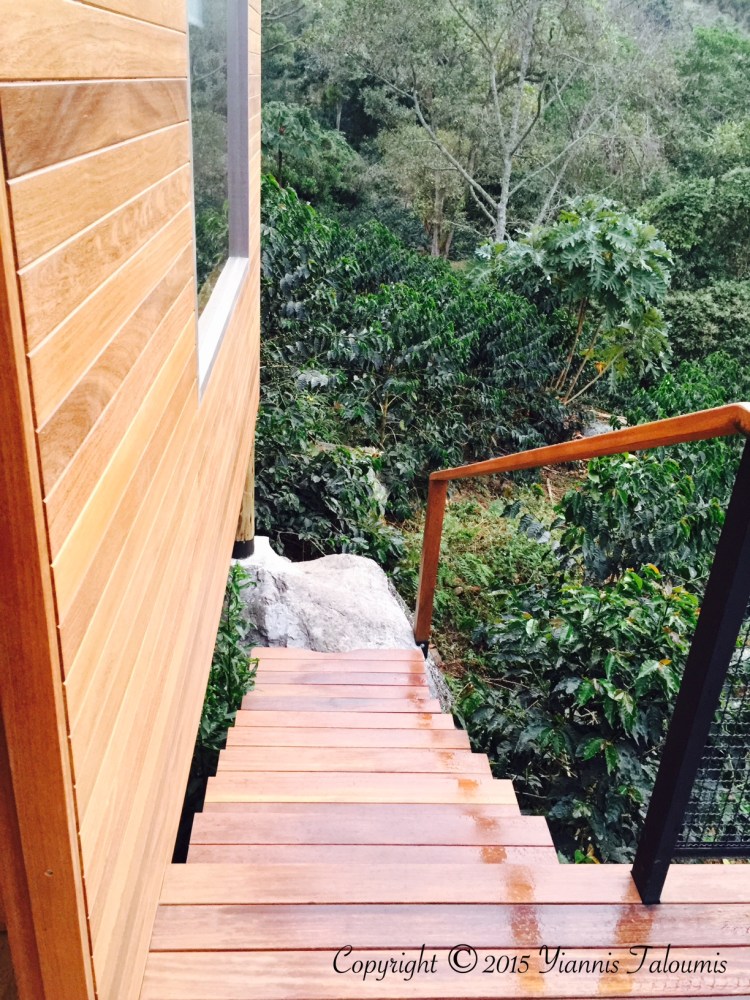
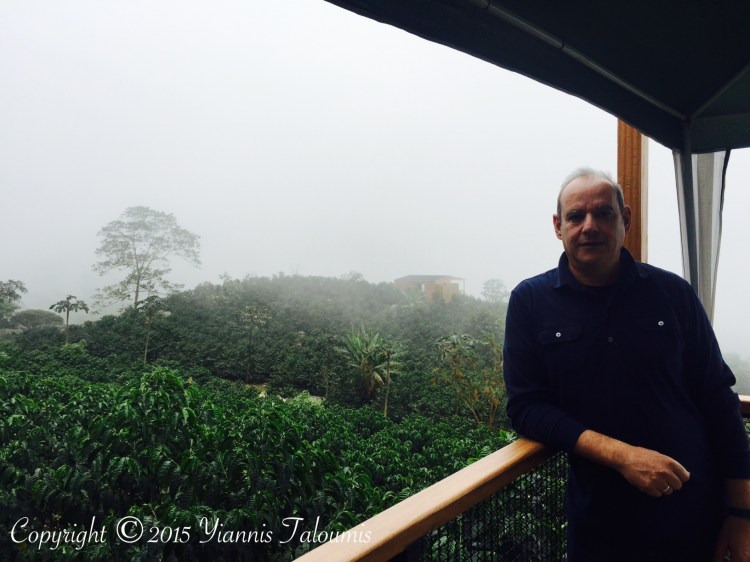
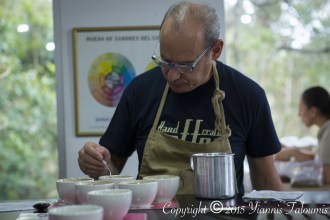
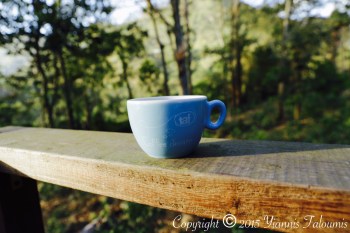
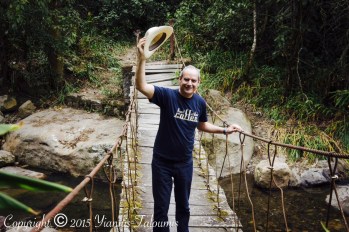
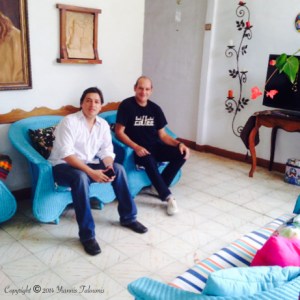
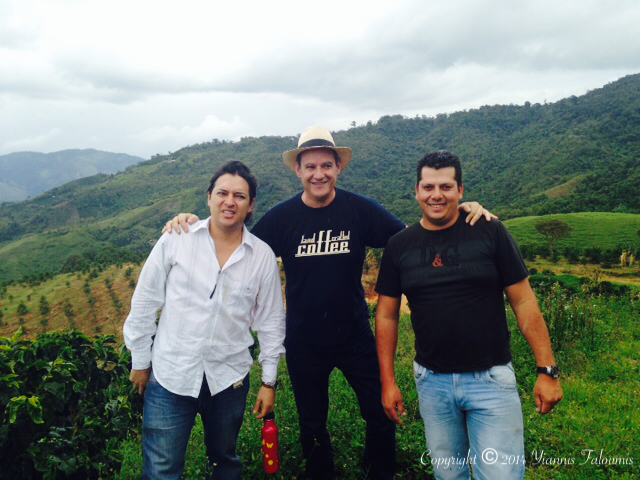
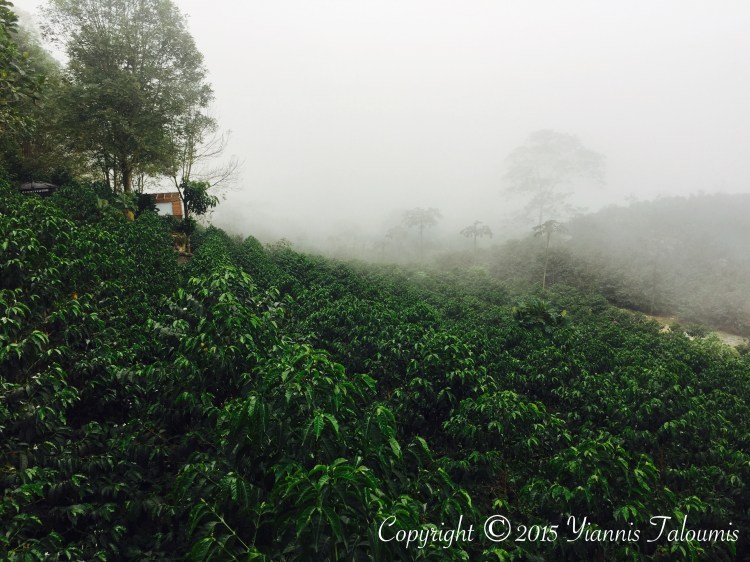
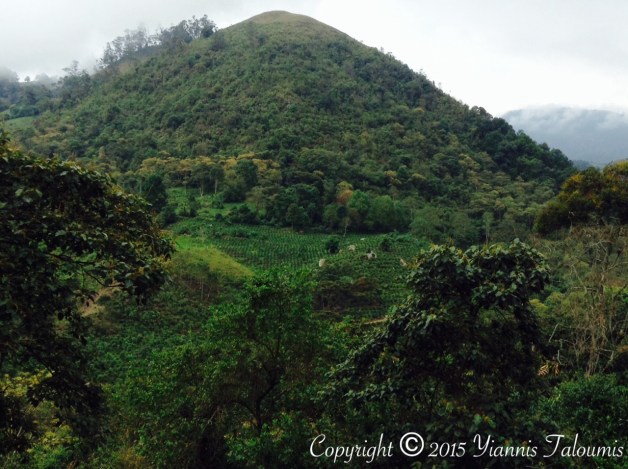
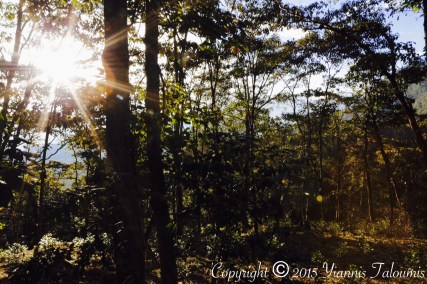
A few weeks ago I traveled to the Eastern Cordillera of the Andes, to taste the first harvest of Sidra coffee in one of my favorite farms, the sophisticated La Palma y el Tucan. I was their guest for two days in the beautifully located farm, staying in the wooden eco friendly cabins. The feeling of sleeping and waking up in such an environment, it is not easy to describe in words. Tranquility, sounds from the river Apulo passing through trees, unique sense.

phonto (1)phonto (5)

phonto (2)

phonto (3)

phonto

phonto (3)

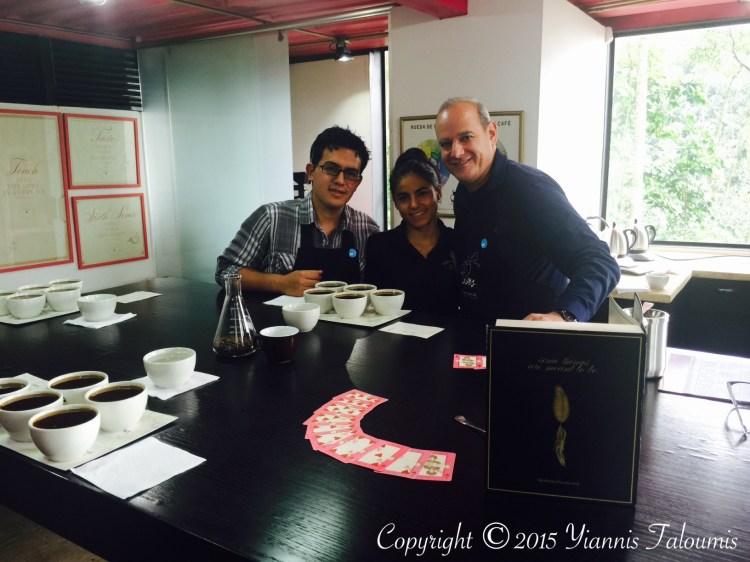
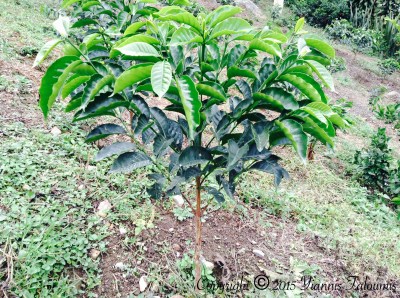
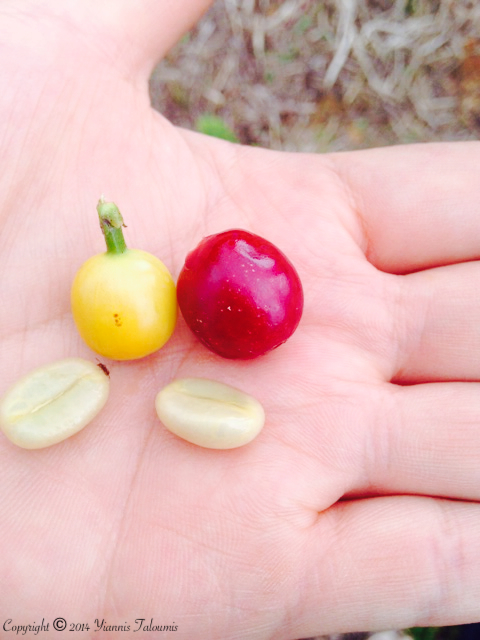
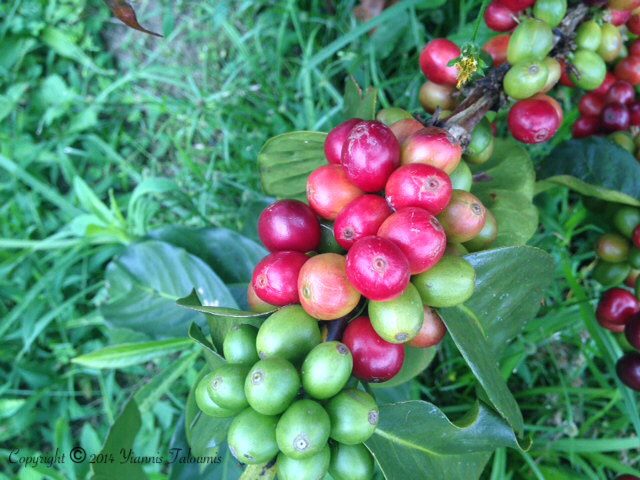
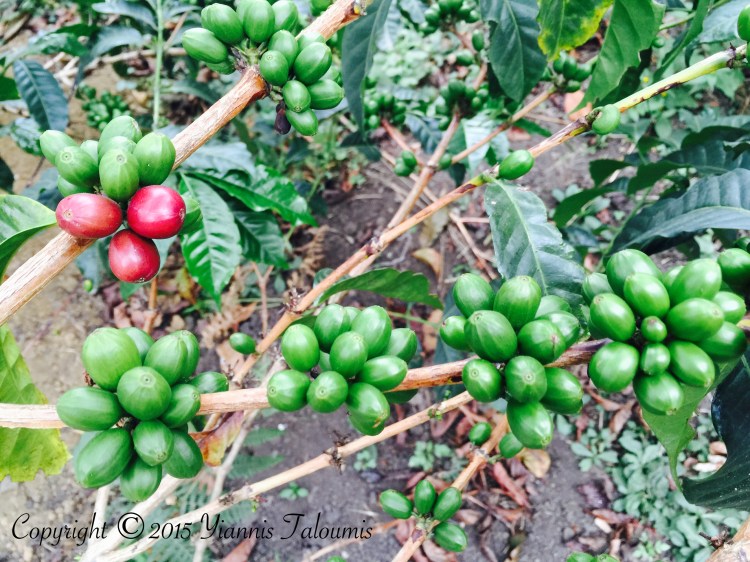
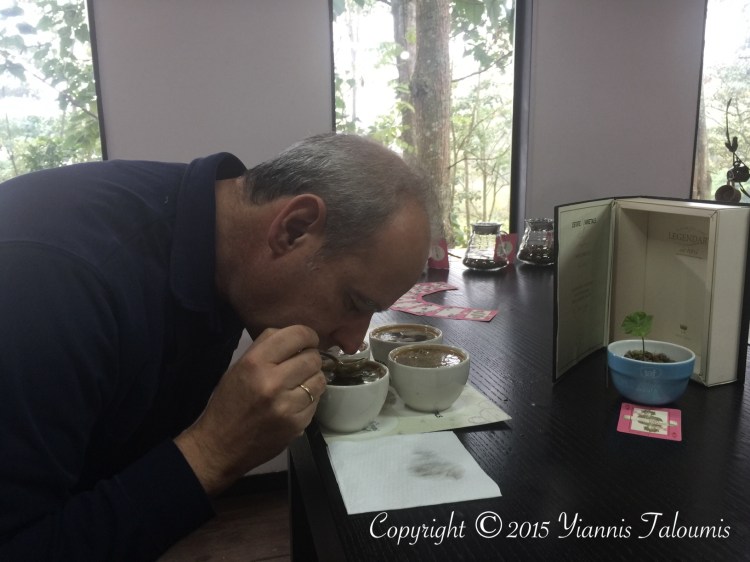
The fruits of Sidra grow on trees that reach up to 2.5 meters high just in the first three years, in a very specific microclimate with high humidity levels. Already on the farm the plant has adapted so well. The formation of the branches coming from the trunk resembles that of Geisha. We evaluated 6 picolots including Sidra, extremely small quantities of different varieties, Heroes and Legendary virieties, like the owners have named them, which make only 1% of production. Of these, I have chosen the Sidra and bought their entire production, a limited reserve lot for the project of Direct Relationship for Taf coffee, which is expected to arrive soon in the roastery in Athens. For the processing, they used a Lactic-Acid Fermentation, which resulted in a complex cup full with notes of cedar and red apple, so special.
phonto (4)

I feel so excited about this very first harvest, the moment of 2015 that someone will know how Sidra from La Palma y El Tucan, in Taf roasting tastes like.

The evening at the farm passed pleasantly, by drinking Argentinian Merlot, with strong tannins in the mouth and an exquisite rum Santa Teresa Gran Reserva from Venezuela, accompaniment of traditional music. All happened slowly and when even thinking of that two nights there, is enough to feel that you can lose yourself in the Cordillera.

You can watch the amazing  video that my friends – owners of the farm La Palma y El Tucan made for our collaboration here!
Enjoy!
Coffee from Colombia

phonto (4)

Colombia is the fountain of arabica coffee, is the second largest producer of coffee in the world. Colombian coffee is cultivated on its particular geographical regions, that consisted of the southern (Narino, Huila,  South of Tolima and Cauca), the central (Caldas, Quindio, Risaralda, Norte del Vale, Antioquio, Cundinamarca, Norte del Tolima), and the north (with the departments of Magdalena, Casanare, Cesar, Norte de Santander and Santader). Coffee grows on the Cordillera de los Andes, the western part of the principal Andes chain. There is a ten- point deviantion in the gradient from the lowest to the highest level and that range is taken as a sample for all central America and Mexico. Its climate, with continuous rainfalls, gives people the chance to harvest all year round.

phonto (7) There are two types of harvesting, reffering to the amount produced, the principal period from Arpil until June and the so-called Mitaca, which begins on September and last up to December.Colombia’s special feature is that the majority of coffee beans (60%) comes from producers that only own areas smaller than a hectar. Less that 1% of the producers owns more than 20 hectars. That makes Colombia the country of 500.000 farms.  From this enormous amount, I only distinguish one.
phonto (1) phonto (3)

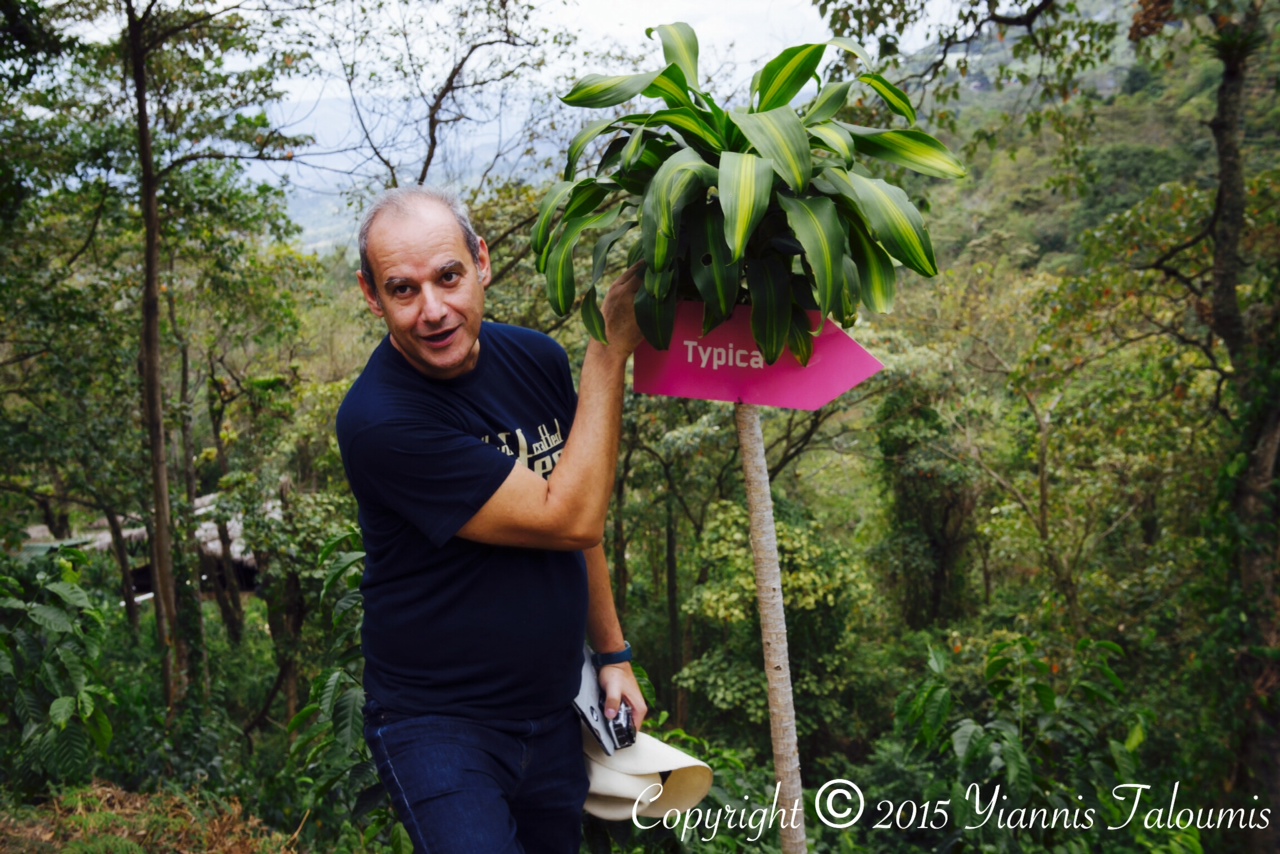
La palma y el tucan is situated in Cudinamarca, 1.800 meters above sea level and has a three year old story. I visit them once a year. The owners, Elisa and Felipe are two visioneers that focus on production on their own, unique way. They worship quality and look for persistency in their coffee, like me, we are bound by common values. They don’t follow the traditional model of cultivation, but instead they have cultivated exotic varieties for Colombia, such as SL 28, typica, geisha, red bourbon.
phonto (10)

Farm’s microclimate is perfect and yet favored by river Apulo that passes by the farm.The owners have built a wash station to make the processing, fully harmonized with the environment, that uses solar power system panels. The lab has a sophisticated style, wearing camouflage, all covered up with mirrors- that reflect the trees! They have also taken good care of their guests and made cabins for them.

phonto (2)

Taking for granted that the farm is three years old and the trees are still young, giving low production, La palma y el tucan coordinates with the neighboring farms with a special care program, that lets them control the picking and then practice the process in the farm.

phonto (8) phonto
Until today I was given coffee made out of this neighboring farming programm, but this year I am waiting a tiny amount from the already small production of their own coffee trees. Processing follows particular methods and rules, with enormous caring for the mature fruits, such as experimenting on different customised processing profiles. In their lab I had the chance to taste many of these cups and I will always remember it because there are only few times that someone has such a complete coffee experience, from tree and processing to the cup.

 phonto (6) phonto (5)

During my last visit, I made two choises from the farms next to La palma y el tucan, named Rosalbina and Jorge Espitia.
I am expecting to travel to Colombia, to taste the coffee from the cherries that grew in their own trees and to sleep in the new cabins at this earthly paradise named La palma y el tucan.

phonto (9)

Timana Huila, Colombia

 phonto (7)

phonto (5)

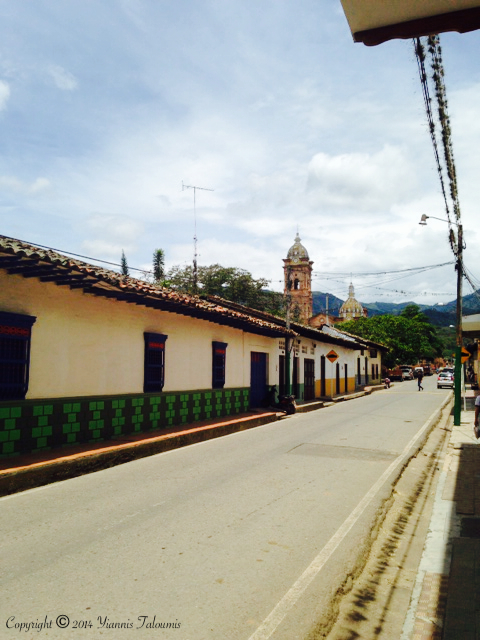
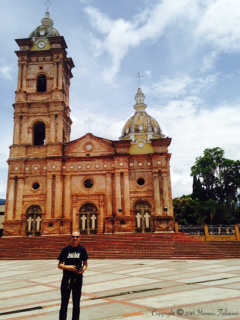
Timana is a small town in the south of Colombia, 446 km from Bogota, in Huila region. Huila  is very famous for the quality of its coffee. It was build by Spanish conquerors in 1538, and still keeps its historic character and atmosphere today.

phonto phonto (1) phonto (2)

In this microregion there are approximately 2.000 coffee producers and every single field around the area reaches 1731 m. up to 1829 m. altitude, in Colombian Andes. The varieties that are cultivated there is Caturra, Castillo and Tabi  (a native typica).
 phonto
phonto (6) phonto (8)
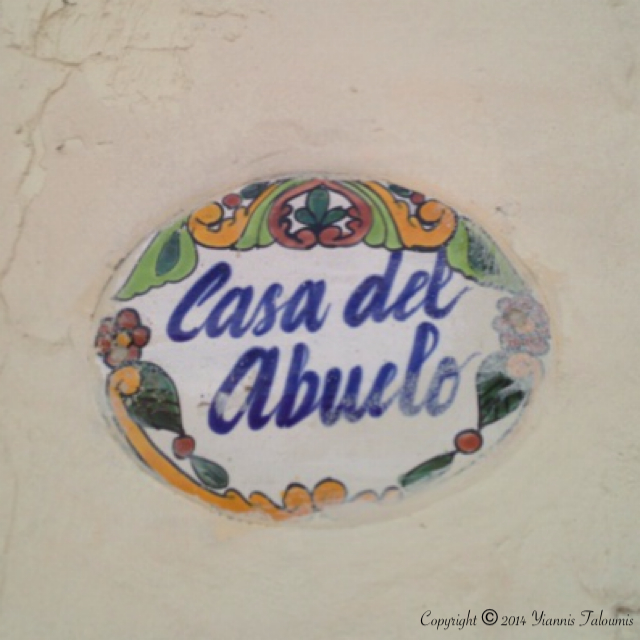
When Cup of Excellence was over, I left with Marco from Neiva heading to Timana. There Neftali, the manager of the station  where parchments are gathered, was waiting for us. Neftali’s house is 250 years old and it is called Casa del Abuelo. Before we leave to the farms, Neftali prepared some coffee to bring with us.
 phonto (4)
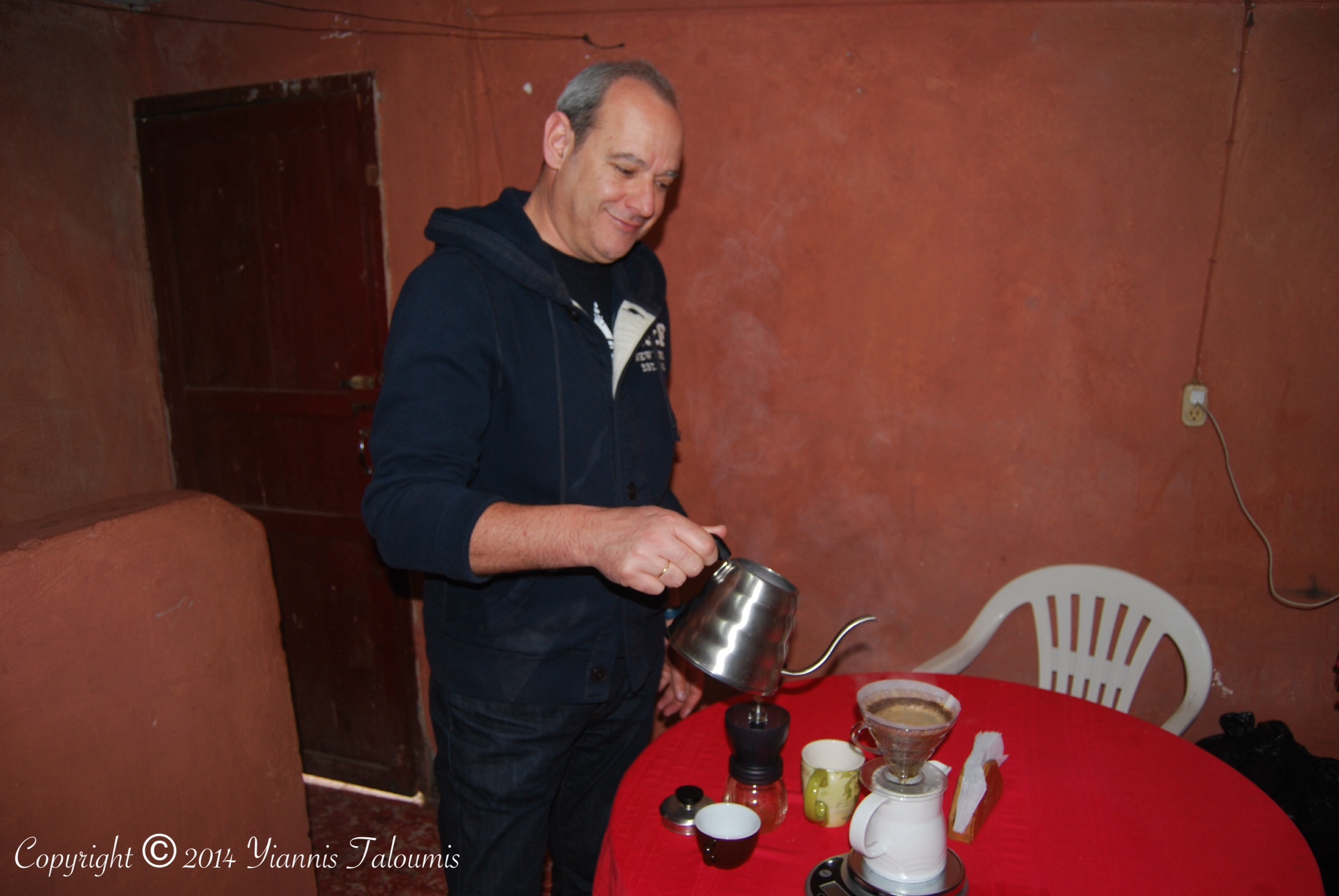
He used a small jug, putting 780 ml of water and 36 gr. of grinded coffee 100% Colombian Caturra – Timana. He boiled the water  along with the coffee, exactly the same method we use in Greece to prepare our traditional beverage, ibrik coffee. Then he decanted the coffee into a thermos and carry it so we would have coffee for the rest of the day in the farms. This particular coffee reminded me the one made with the italian moka, though it had so intense acidity and medium body.
We named this coffee NEFCAFE (Neftali Cafe). It was so funny!

Finca la Esperanza, Guatemala

phonto (5)

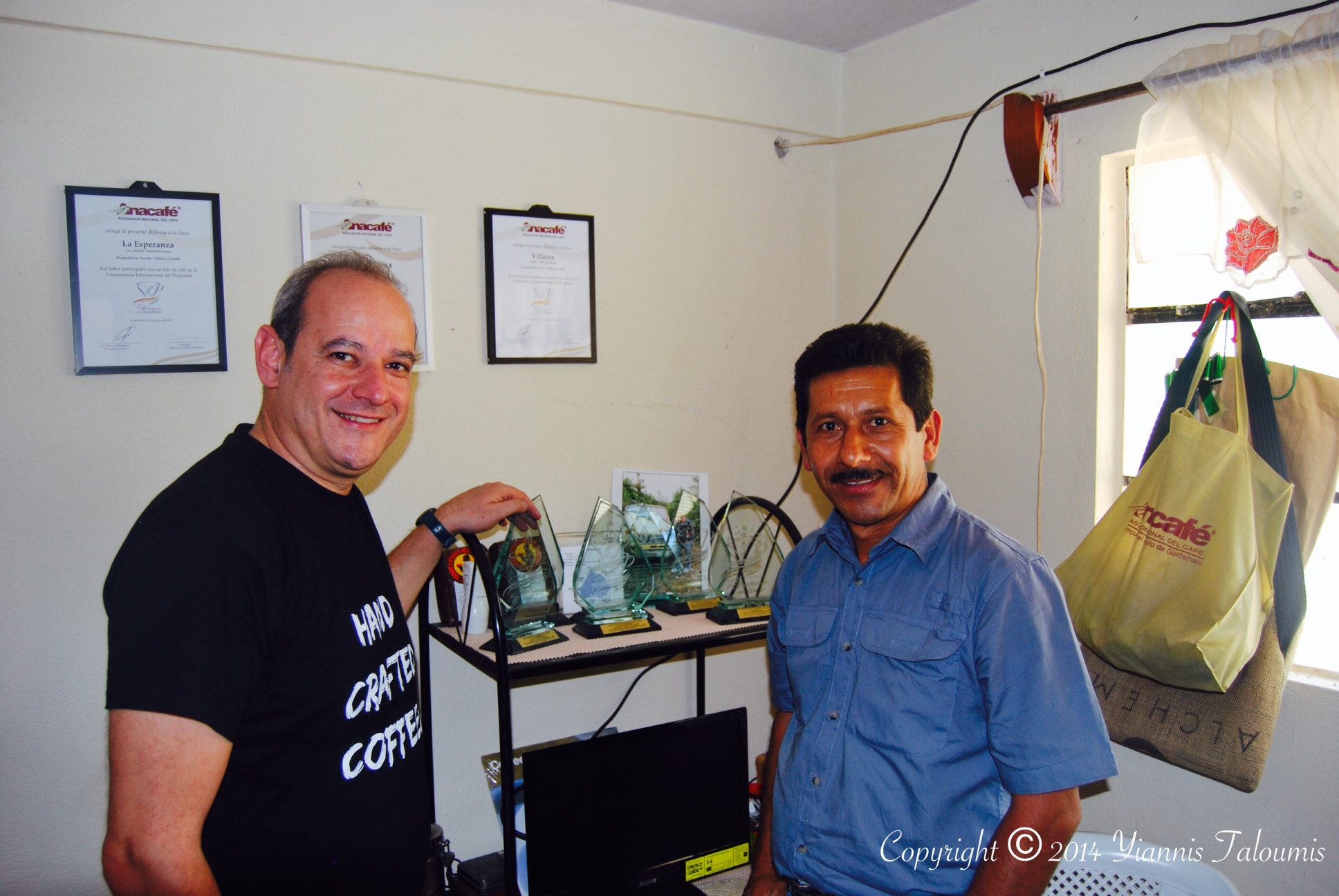
phonto (2)Aurelio is one of the 8 children of Heleodoro de Jesús Villatoro, founder of the Finca la Esperanza farm, winning often in the Cup of Excellence of Guatemala. One part of the farm, Villaure, is named after the surname and name of Aurelio Villatoro.

phonto

 phonto (4) phonto (1)

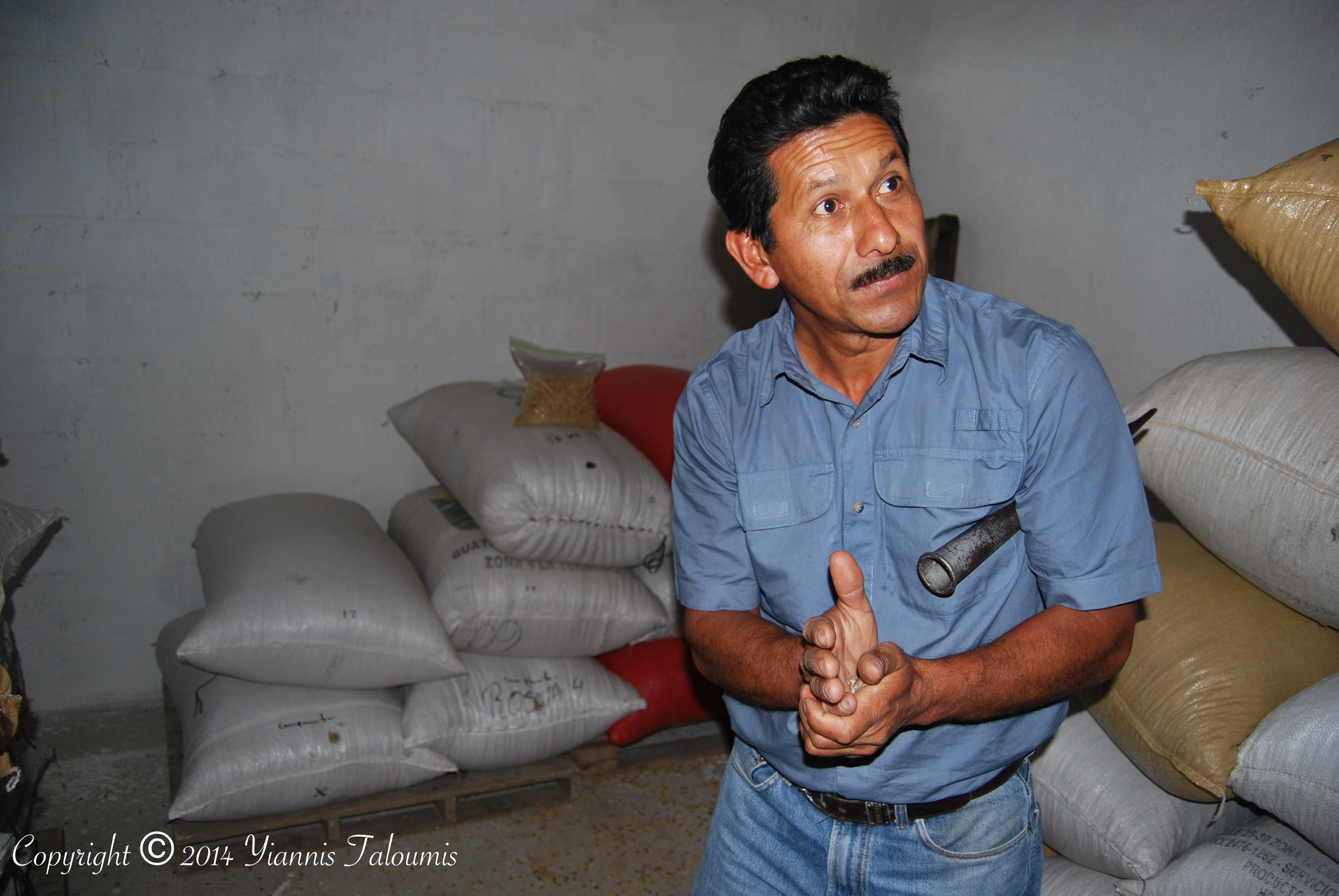
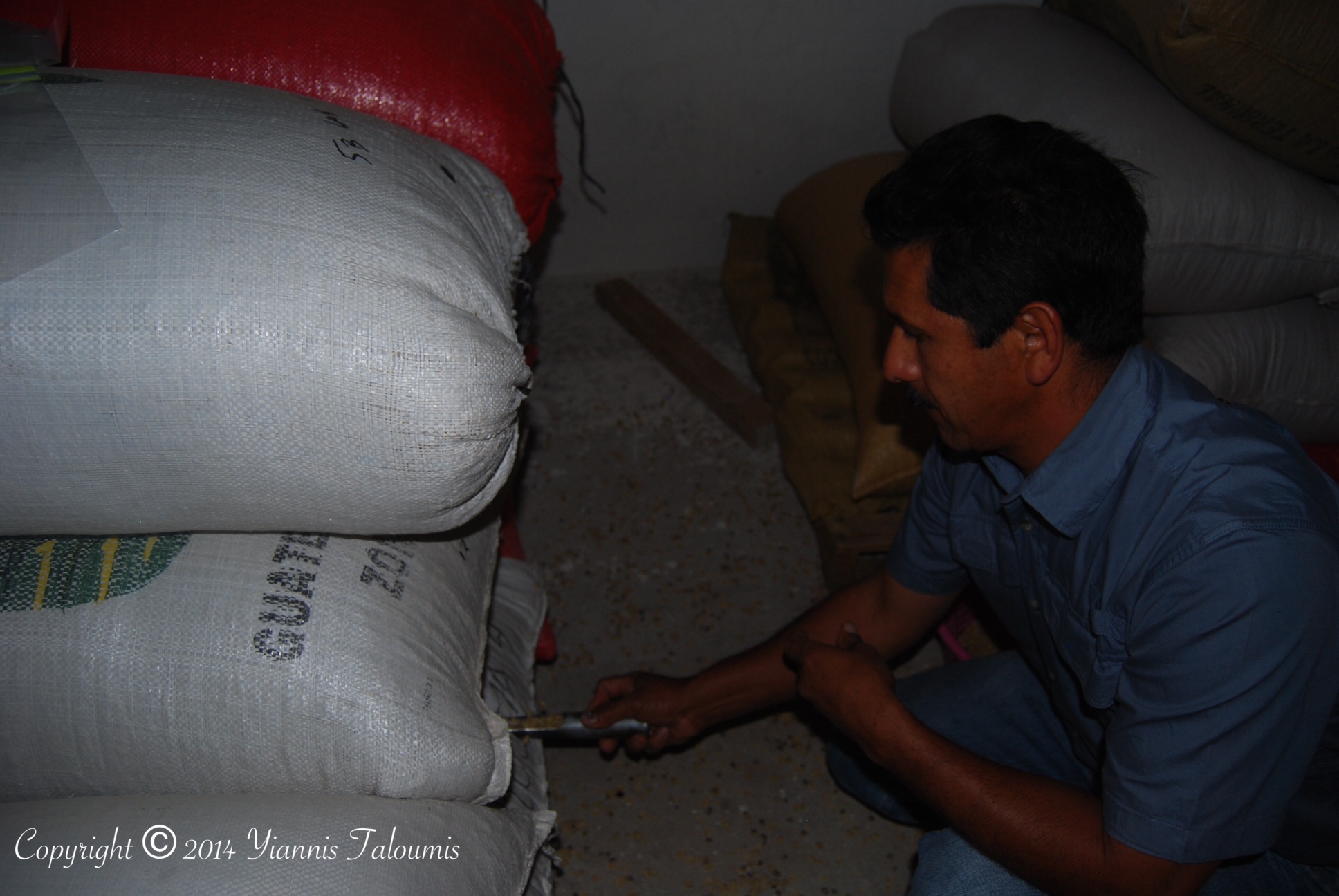
In the farm there are lots in different altitude levels, and this is why produced coffee gives many different taste profiles. Aurellio is a capable producer with great experience, he has managed to seperate the lots and give each one a unique name/ code. When I visited Huehuetenango, Ι was Aurelio’s guest at the farm. In the afternoon, we wanted to have a cup of coffee, so he went to the warehouse and brought a small amount of beans of Campamento Alto, still kept in their parchement, as farmers do until coffee goes for processing. We roast it in a rather atypical way, using a pop corn maker!

phonto (6)

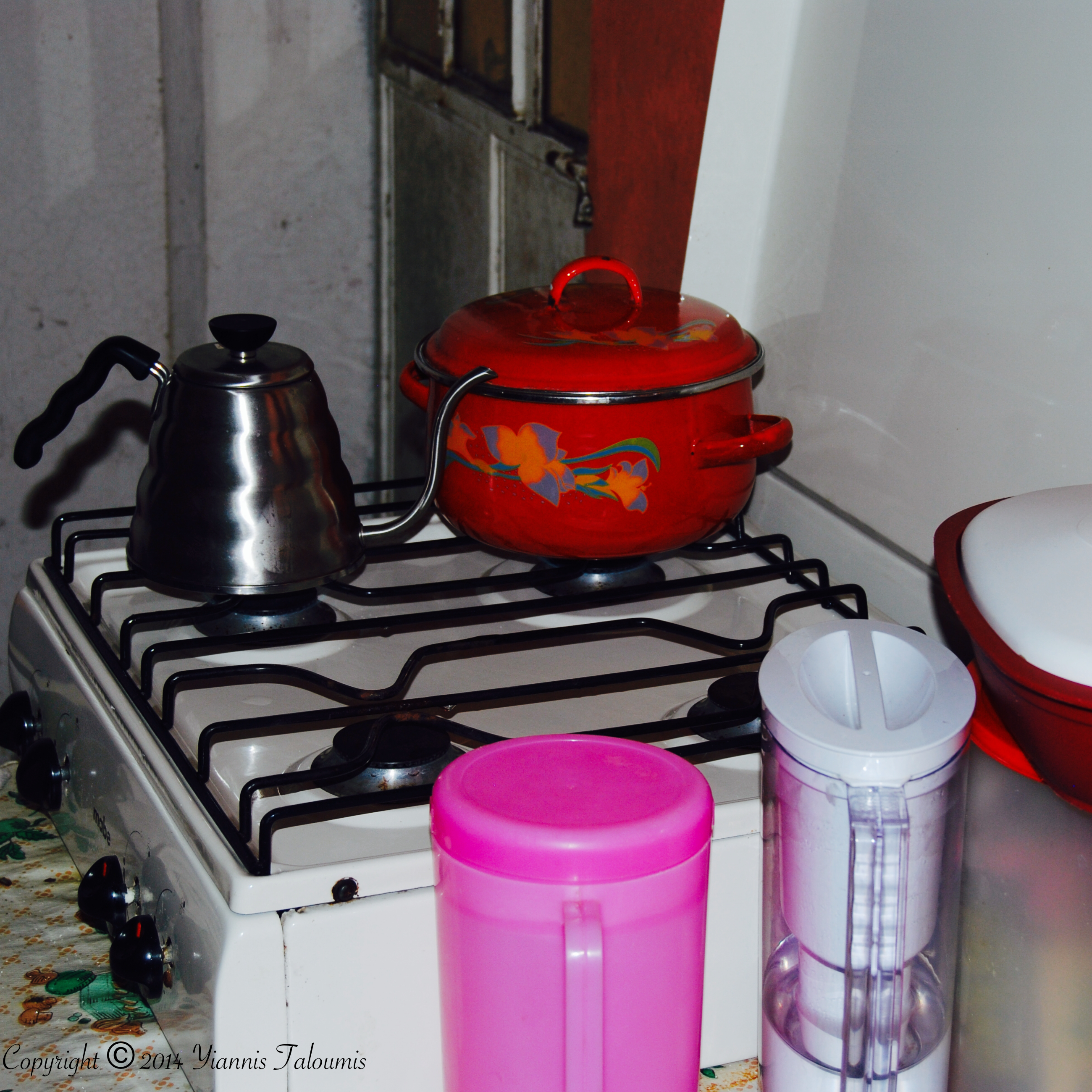
I enjoyed this coffee next morning in Aurelio’s balcony, around 5.00 a.m when Finca la Esperanza wakes up and the day at the farm begins. I surely was well disposed by the atmosphere, but frankly it was a great coffee. I prepared it on hand brew, using a hario V60 and 15 gr of coffee for 300 ml of water.

phonto (3)

The next day in a cupping table in Huehuetenango, in a blind taste test, I rated highly a sample that corresponded to Campamento Alto!!!