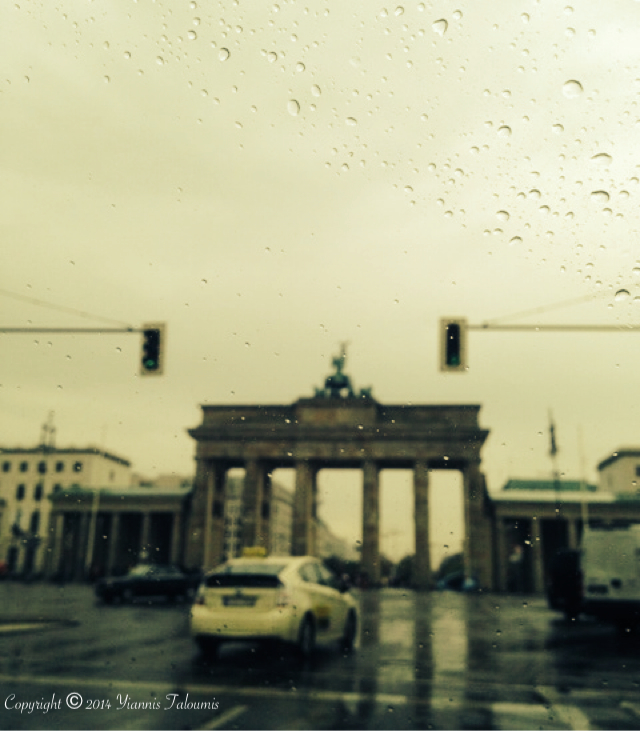
Gesha in Berlin

phonto (8) phonto (10)

Coffee is not just a beverage. Everything begins with a plant, the cultivation of which depends on many factors so that this beverage can be special. One of the major factors is the variety along with the terroir.

phonto (11)

A really special variety of coffee is Gesha. Particularly in case of Arabica grown in Panama highlands, there is a unique complexity. Ninety Plus is a producer from Panama, that has succeeded in giving different profiles in Gesha variety. They cultivate coffee in area Volcan, in Panama, each and every one claims its sui generis character that cannot be compared to other Gesha varieties. The next important factor is processing, which can be natural, washed, honey, or hybrid, with various characteristics.
 phonto (7)

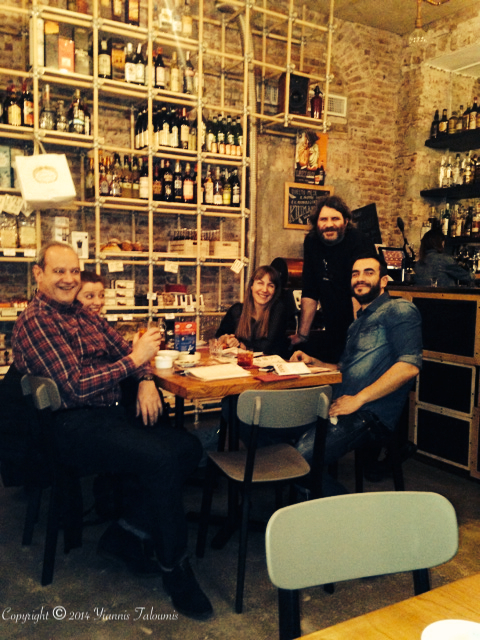
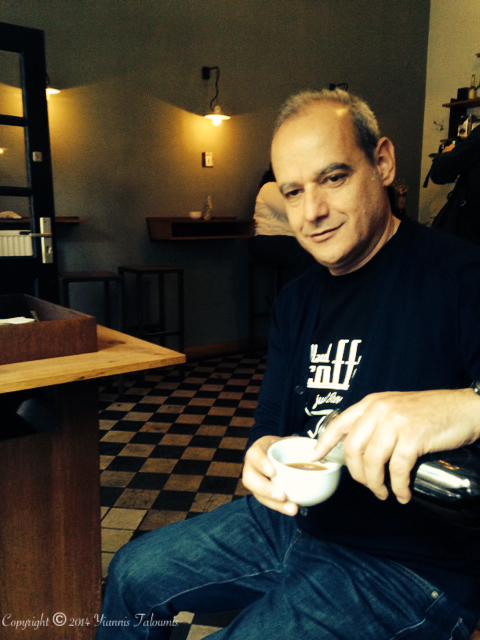
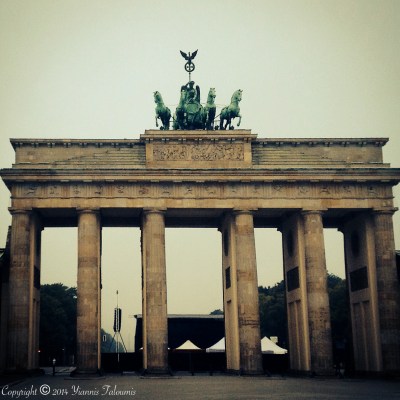
Our team and me visited Berlin -in the first picture I sit at Chapter One Coffee shop. We organised an event so that the local coffee geek community would have the opportunity to get to know “Natural Perci Red” and “Washed Narkissus”, two of the coffees we import.  The coffee was roasted skillfully at Taf Roastery in Athens, by my brother Ilias two days before its presentation.
Roast is the next important parameter.
 phonto (9)

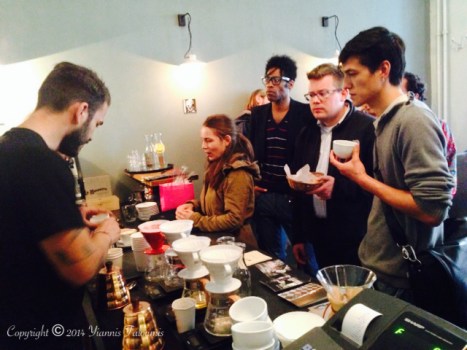
Last but not least, “the making” is of course really significant. In the event the baristi that have prepared the beverages areinternationally awarded. Stefanos is this year’s World Champion in Brewers Cup, Nora Smahelova, owner of the cafe and among other things a member of the World Barista Jury and Chris, 3rd in World Barista Champion of 2014 and primar World Latte Art Champion. Their job is to put in the cup all those exclusive characteristics coffee has gain up to now – aromas, its taste and flavor formed during the cultivation, the processing of the mature cherries,  also affected by the roast profile.
The utensils fthey used were Hario V60. The recipe for the brew is 15 gr.
of freshly ground coffee in 250 ml of water, in about 92 – 96 Celsius degrees.
photo

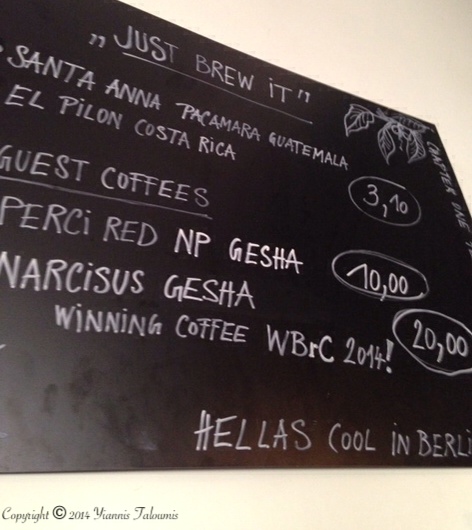
The right (and fair) price for those amazing coffees was 10,00€ for Perci and 20,00€ for Narkissus, per cup.
We sold more that 50 Narkissus cups in brew that day.

.
Some things (never) change.

   phonto (7) phonto (1)

Some things change and some things don’t. 

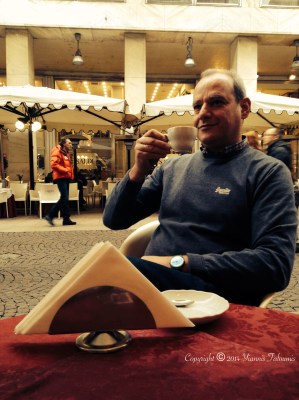
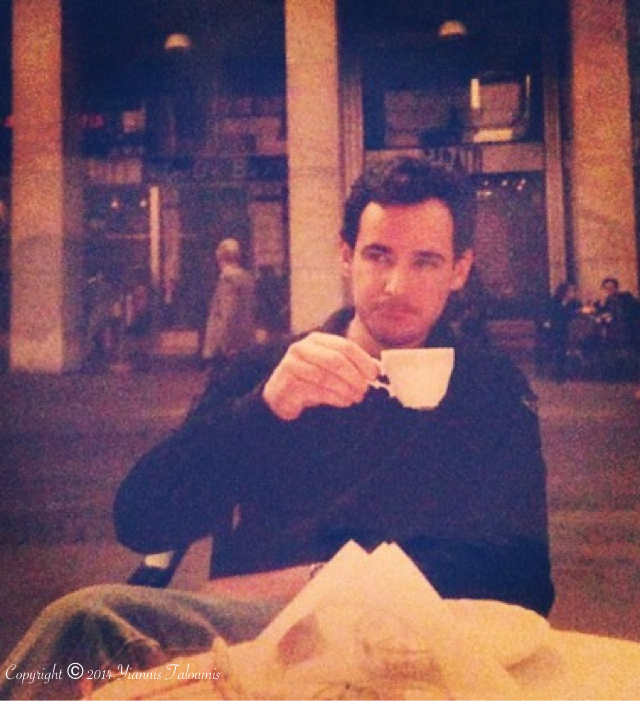
In the picture on the left, here I am in Italy, 22 years ago, in the centre of Milan, via Vittorio Emanuele II, at the central café Bar Ba del Corso. It was my very first pursuit for espresso. I can still remember its bitter taste, I surely was influenced by the fact that I was having my coffee in the centre of Milan, moreover because that period (and many years later) espresso was supposed to be an italian matter.
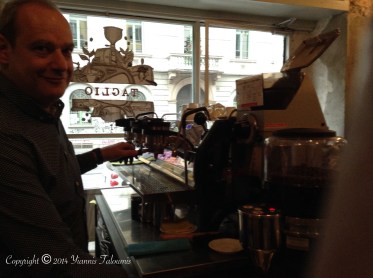
In the picture on the right, here I am again, 22 years later to the very same table. The only thing that has changed is my age. The café still holds the same name, same decoration, serves the same coffee in the exact cup, color and shape. It is so boring and bitter that the only thing that kept me there was the memory of the moment.  
 
 photo (1)
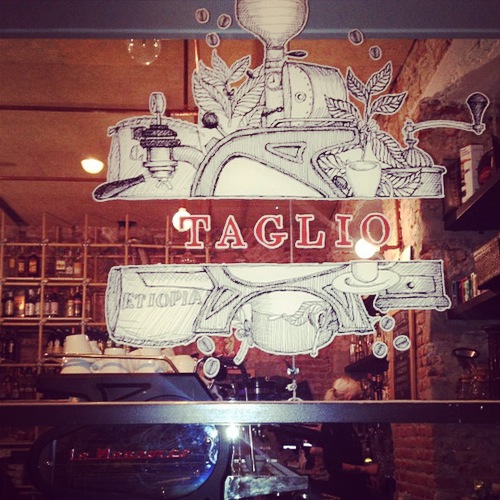
The real reason for being in Milan this time was not the coffee pursuit, but the promotion of my coffee, Taf handcrafted coffee. So, instead for a boring, bitter shot in Milan you can have speciality & single estate coffee in Taglio, Via Vigevano 10, at the famous Navigli area.
phonto (3) phonto (4)
phonto (5)
 
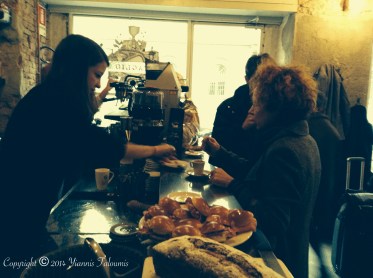
Raffaelle will welcome you and show you around in this temple of flavors. Guila, the barista will prepare espresso in this amazing sophisticated La Marzocco machine, one shot won’t be enough.
Well, some things change. 

phonto (6)

Cup of Excellence, Colombia

phonto (5)

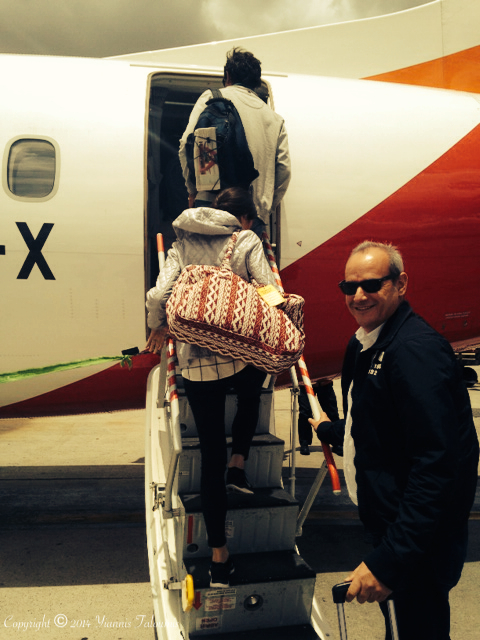
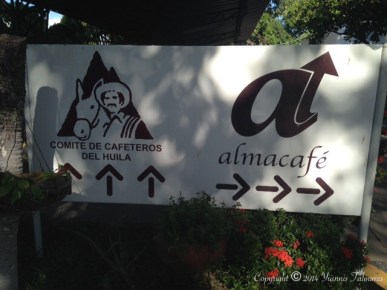
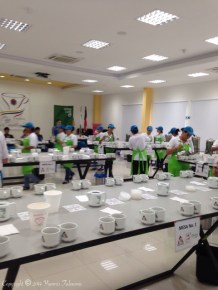
This year’s Cup of Excellence took place in city Neiva, south of Bogota, from 1- 5 of September. I landed there, departing from Bogota with Anviaca Air, it was enough to walk a few meters from airport tarmac to the baggage claim to feel the heat, like lava. Thankfully, Almacafe facilities, where all the cupping sessions were held, were excellent and fully air-conditioned!

phonto (4) phonto (1)

Cup of Excellence is one of the most prestigious coffee awards and is given to a special lot for its excellent quality.
Its purpose is to highlight outstanding coffees from special farms in their native countries.
Every single coffee awarded has been tested (on cupping) at least 5 times before winning.

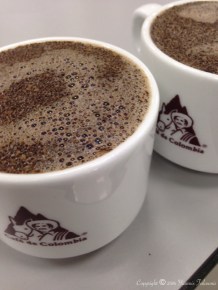
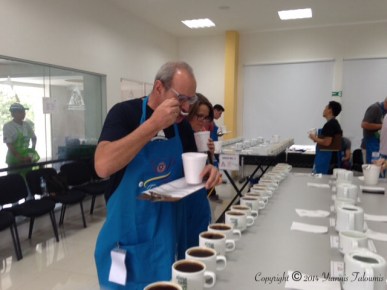
 The procedure is fascinating but also hard, it needs a great deal of concentration to rate properly each coffee in the time given by the protocol. The aromas and taste characteristics change quickly, so total focus on every single cup is the key to be fair in evaluation. Knowledge and experience are taken for granted in order to be part of the international jury.

 phonto (3) phonto (2)

 841 samples from the national Colombian produce were sent to be evaluated some week earlier. Only those that were rated with at least 84/100 after continuous evaluation passed to the next level. There are restrictions and a really strict protocol concerning the uniformity of the roasted beans, water temperature, the proportion of coffee and water such as the time of preparation. Only 59 samples passed to the semi- finals.

The international jury evaluated them with the minimum rate of 85/100. The samples that did not gather at least 85, won’t  participate in the auction, which will take place on 21st October 2014. Only 28 lots have made it finally.

Through this wonderful procedure I enjoyed more three lots, that I will try to overbid. Exotic taste profiles, they are very different from the usual character of Colombian coffee. You can find mint, eucalyptus, tropical fruits, molasses, black tea, malic acidity and really clear aftertaste, from what I can remember. I am going to wait for the samples and then I will organize an open cupping for the lovers of these unique coffees.

Timana Huila, Colombia

 phonto (7)

phonto (5)

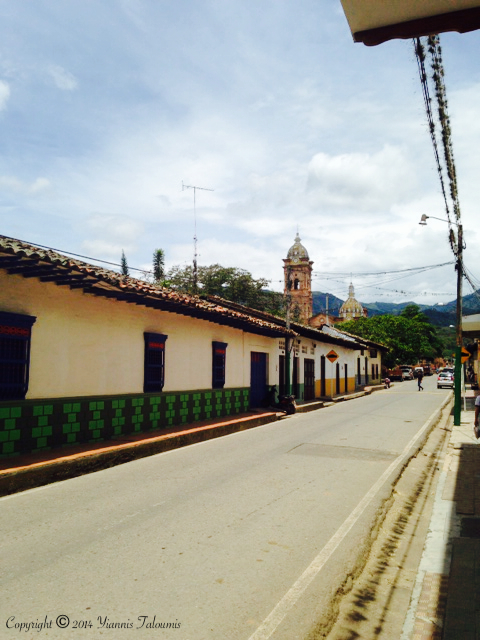
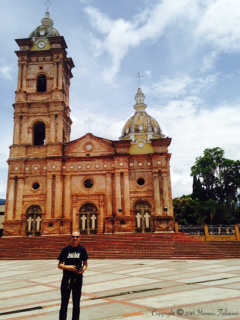
Timana is a small town in the south of Colombia, 446 km from Bogota, in Huila region. Huila  is very famous for the quality of its coffee. It was build by Spanish conquerors in 1538, and still keeps its historic character and atmosphere today.

phonto phonto (1) phonto (2)

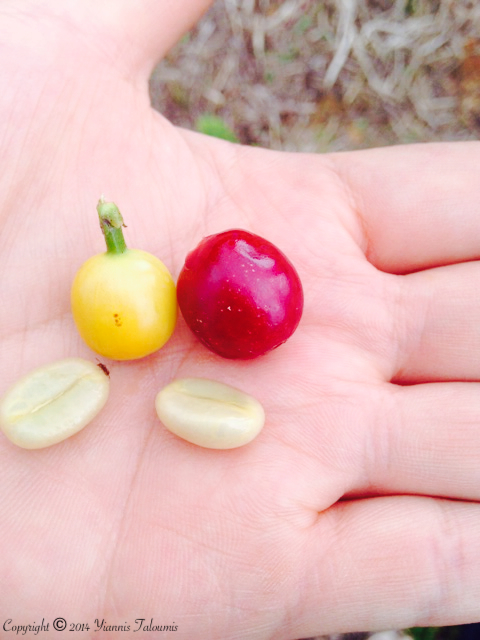
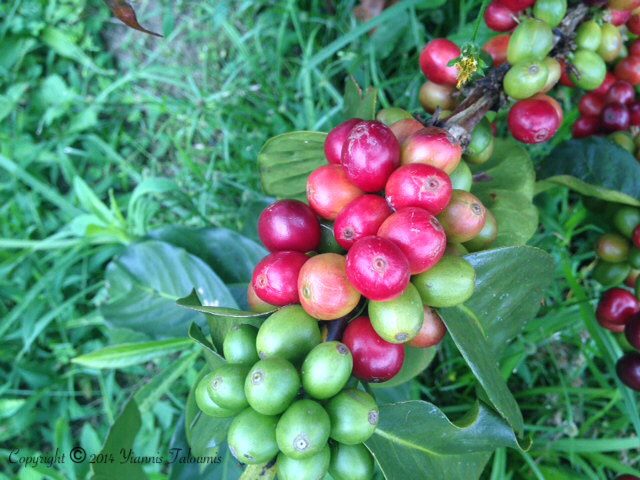
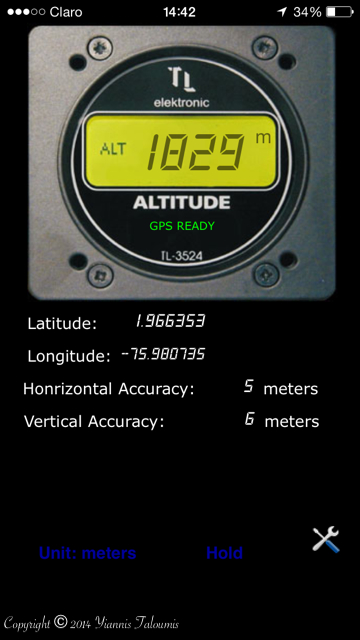
In this microregion there are approximately 2.000 coffee producers and every single field around the area reaches 1731 m. up to 1829 m. altitude, in Colombian Andes. The varieties that are cultivated there is Caturra, Castillo and Tabi  (a native typica).
 phonto
phonto (6) phonto (8)
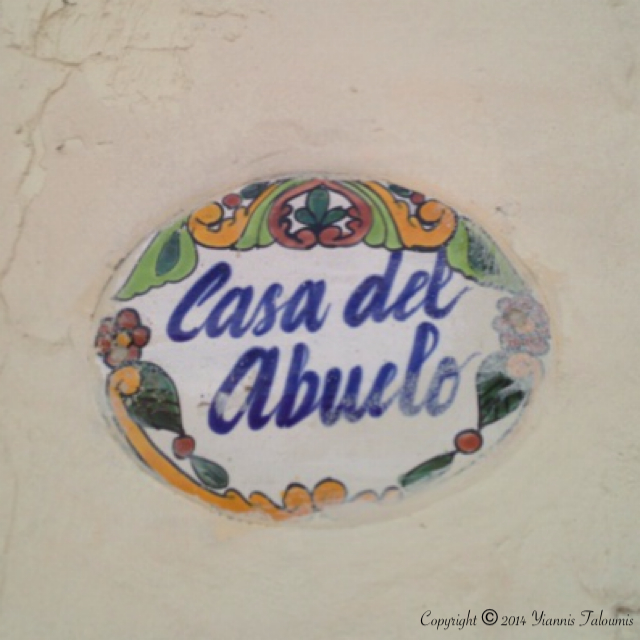
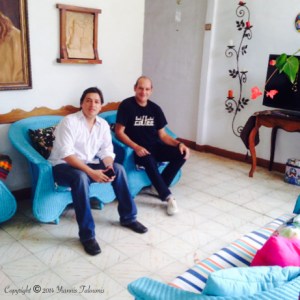
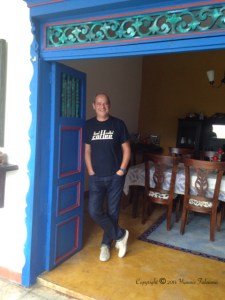
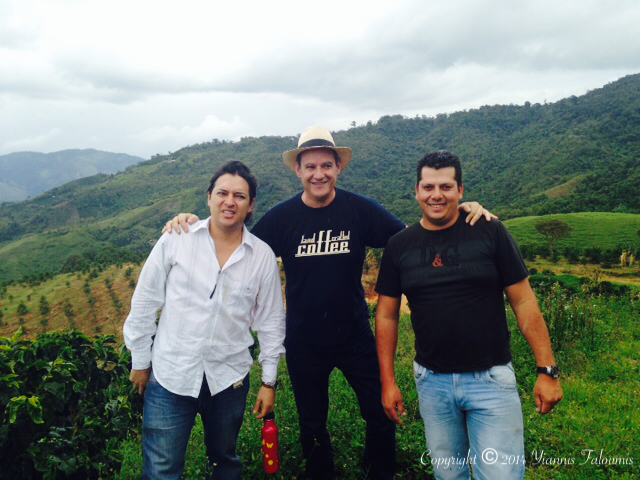
When Cup of Excellence was over, I left with Marco from Neiva heading to Timana. There Neftali, the manager of the station  where parchments are gathered, was waiting for us. Neftali’s house is 250 years old and it is called Casa del Abuelo. Before we leave to the farms, Neftali prepared some coffee to bring with us.
 phonto (4)
He used a small jug, putting 780 ml of water and 36 gr. of grinded coffee 100% Colombian Caturra – Timana. He boiled the water  along with the coffee, exactly the same method we use in Greece to prepare our traditional beverage, ibrik coffee. Then he decanted the coffee into a thermos and carry it so we would have coffee for the rest of the day in the farms. This particular coffee reminded me the one made with the italian moka, though it had so intense acidity and medium body.
We named this coffee NEFCAFE (Neftali Cafe). It was so funny!