Josh et la fin d’été grec

phonto (8)

The calendar shows 17th of October 2014, in Athens temperature reaches 28 Celsius (in Greek islands is a bit higher). Greek summer is not finished just yet.  For the last years Josh lives in Mykonos – from early May until late October, while spends the rest of the year between Tokyo and Zurich. He is a passionate believer in quality and invests his time into writing his blog mesubium where he shares techniques, recipes and ideas about gastronomy. When I asked why there is anything about his biography in his blog, he answered that he is not interested in receiving any recognition or interaction from the readers; he only likes sharing information about food, wine and taste. It is a blog about the meaning of food through the way of living. In mesubium some times he also writes fair critics about restaurants, so he doesn’t want to reveal his name. People sometimes are not ready to accept strict critic on a restaurant with a Michelin star!
 phonto (10)

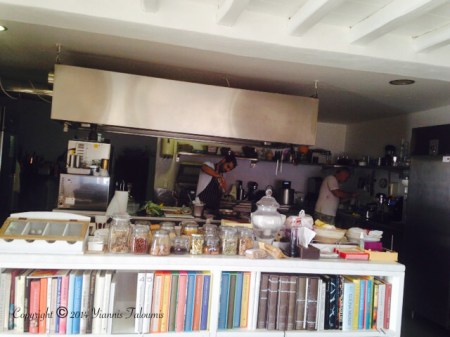
 I visited him at home to say goodbye and we had the chance to discuss about a new concept coffee shop he is interested in developing. His home kitchen with high standard equipment is similar to a professional one and of course the espresso machine is GS 3 Marzocco.  We tasted Ethiopia Sidamo Guji Garde 1, six days after roasting by Taf. This freshly roasted coffee gave us a marvelous cup profile: sweet, creamy with citrus acidity and black tea finish. I made it using 19 gr. on a temperature of  92,5 Celsius degrees on GS3.
phonto (7) phonto (9)

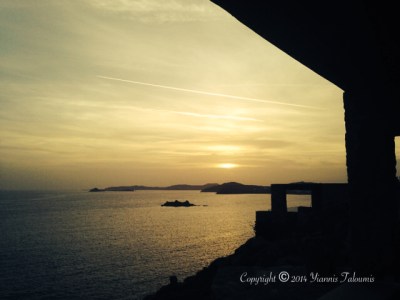
We enjoyed our shots after a vegetarian- vegan lunch that Josh had prepared as he knows my preferences in vegan food. Along with the coffee we also enjoyed the house’s amazing panorama, at the edge of the hill in Psarou gulf, the endless serene Aegean sea. Unforgettable shots in this astonishing environment with the quiet view fed us with ideas about Josh’s future coffee shop.
phonto (11)

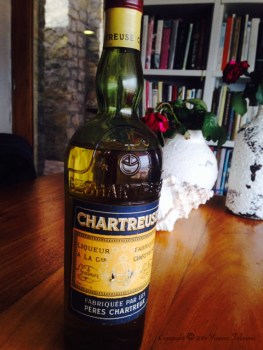
The great closure of the evening came with an old Yellow Chartreuse, the famous liqueur made by monks using 130 herbs and flowers. It was named after the monastery at Chartreuse Mountains in France.  Josh tried an old trick to take out the cork: “The cork made me fish it with a metal rod, a handy tool, I used a 1mm inox spear as the cork tried to slide into the bottle. This is a very useful technique to grab a falling cork. This yellow Chartreuse was marvelous with a unctuous floral viscosity – a perfect bottle of delicious medicinal sweet digestif”, writes on mesubium.

La fin d’été grecque. A beautiful day to end Greek summer.
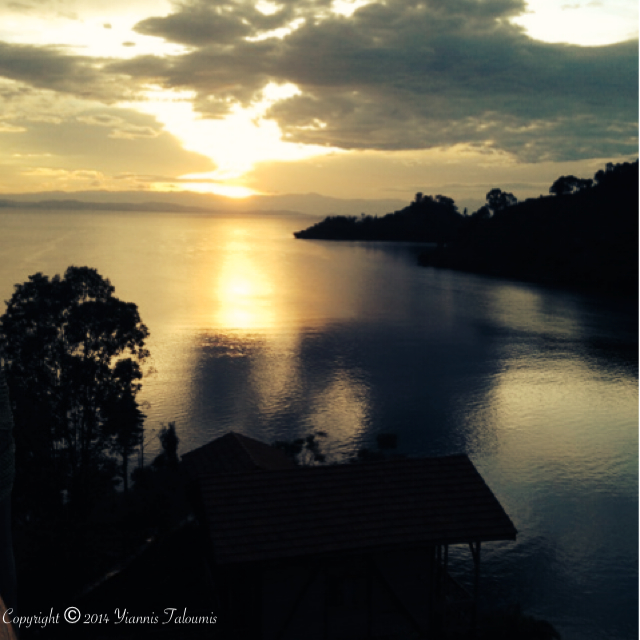
Brewing coffee in Lake Kivu

phonto (14) phonto (8)

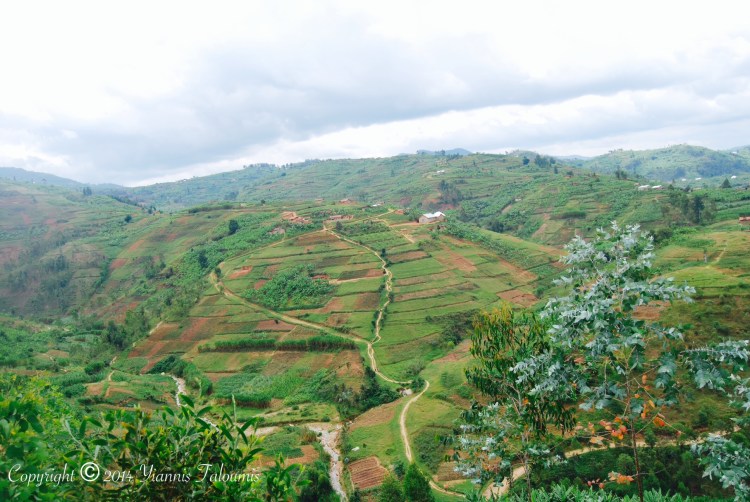
Rwanda is a small country right at heart of east Africa. Belgian colonizers used to call it “Land of a thousand hills”. Of course it has many more. Rwanda has left behind the civil war that haunted their recent memory, and hopefully now people see the future with optimism.

 phonto (13) phonto (12)

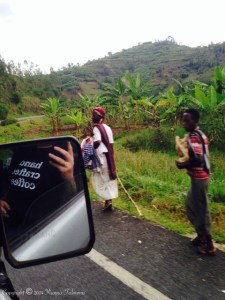
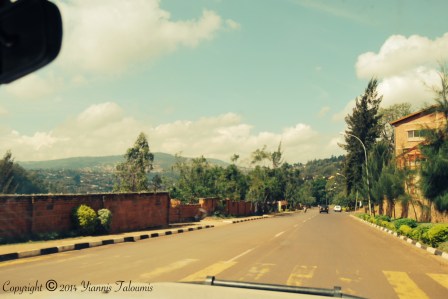
One of the things that impressed me in during my visit was the cleanness and the fact that they do not use any plastic bags, but only paper ones.

 phonto (10)

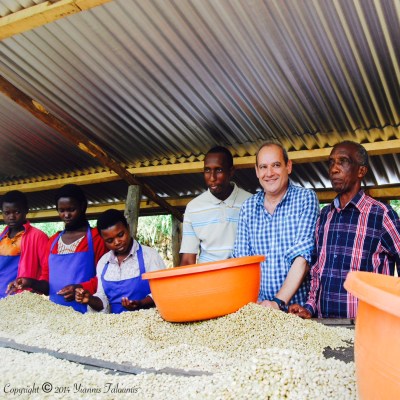
In Rwanda the coffee produced is of very high quality (that is an indication of where this country goes). Important factor is the environment, characteristics as the volcanic soil, the altitude of 1.700 m – 2.000 m and of course their techniques- applied both by cooperatives and also by private coffee stations, guarantee for the best result.

phonto (6)

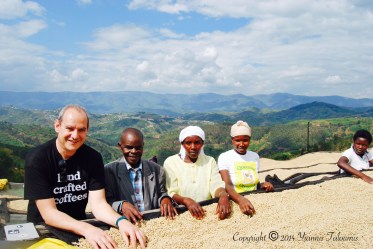
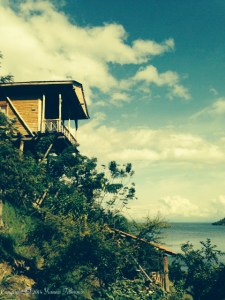
I visited Kageyo cooperative and Gitesi private washing station. These two stations are placed in west Rwanda and both get high scores in the Cup Of Excellence. After my visit in Kageyo and right before arriving at Gitesi we slept over at Cormoran Lodge, in Lake Kivu.

  phonto (15) phonto (11)

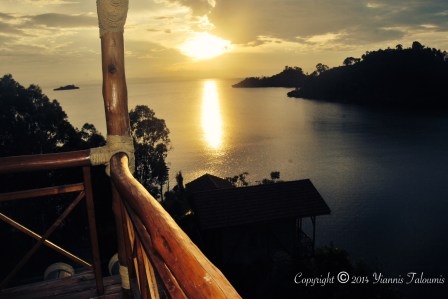
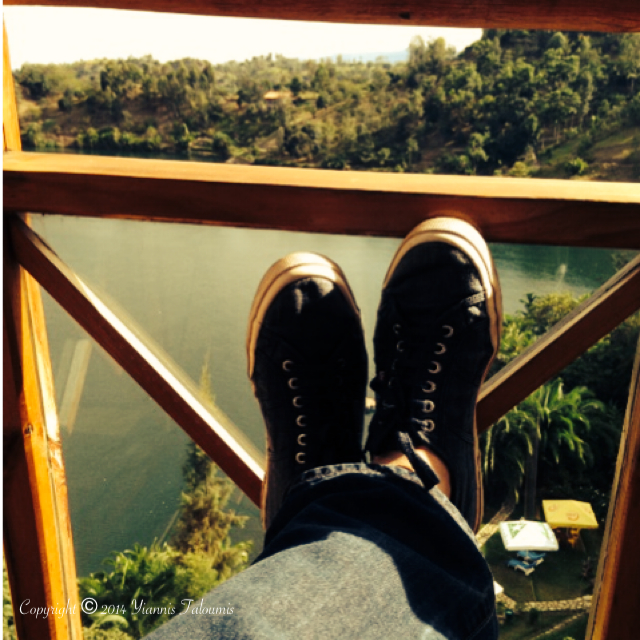
Lake Kivu covers 2700 km² in an altitude of 1460 m., one of ten biggest in the world. I felt more than happy as we arrived right before sunset.

phonto (16) phonto (18)

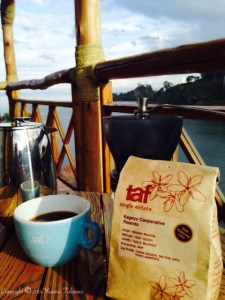
I decided to brew some coffee.I had brought with me some roasted coffee from Kageyo, a manual grinder and Hario dripper, Taf’s cup, so the only thing missing was hot water. Thankfully there was a kettle in my room. The problem was that I could not check the water’s temperature.

 phonto (19)

I enjoyed this high quality coffee feeling at the same time isolated, somewhere all alone.The internet connection revealed the ugly truth. That moment remains in my mind as one of the most magical. Brewing helped.

Gesha in Berlin

phonto (8) phonto (10)

Coffee is not just a beverage. Everything begins with a plant, the cultivation of which depends on many factors so that this beverage can be special. One of the major factors is the variety along with the terroir.

phonto (11)

A really special variety of coffee is Gesha. Particularly in case of Arabica grown in Panama highlands, there is a unique complexity. Ninety Plus is a producer from Panama, that has succeeded in giving different profiles in Gesha variety. They cultivate coffee in area Volcan, in Panama, each and every one claims its sui generis character that cannot be compared to other Gesha varieties. The next important factor is processing, which can be natural, washed, honey, or hybrid, with various characteristics.

 phonto (7)

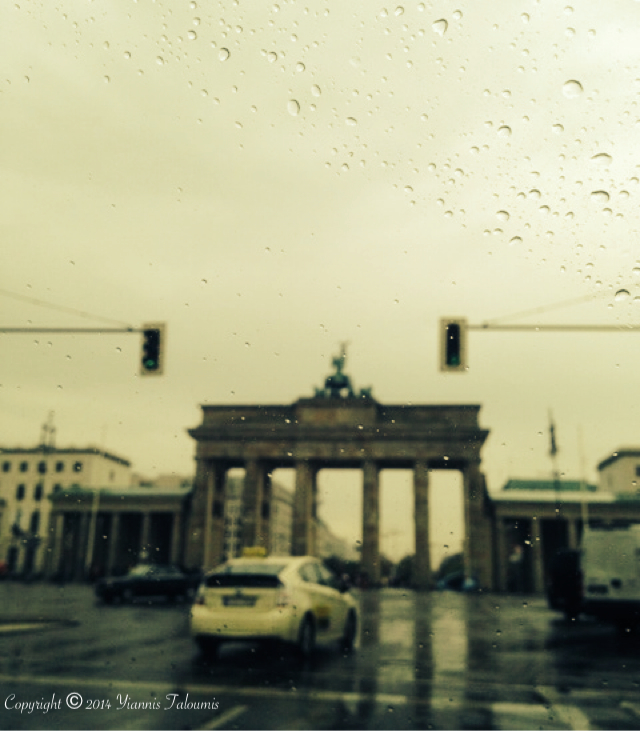
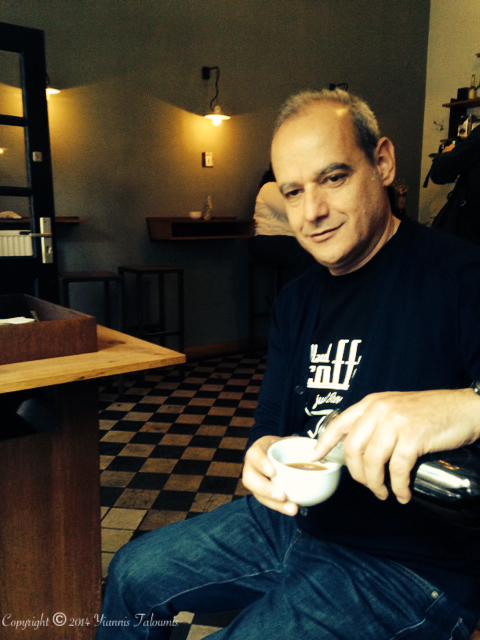
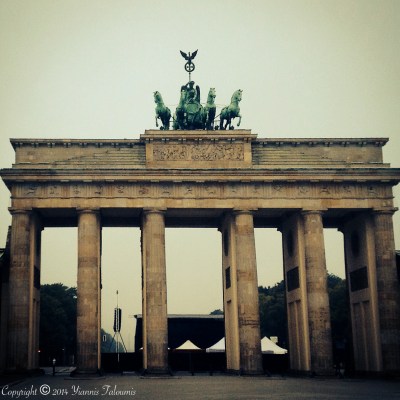
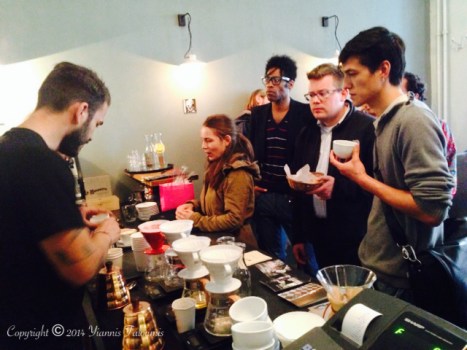
Our team and me visited Berlin -in the first picture I sit at Chapter One Coffee shop. We organised an event so that the local coffee geek community would have the opportunity to get to know “Natural Perci Red” and “Washed Narkissus”, two of the coffees we import.  The coffee was roasted skillfully at Taf Roastery in Athens, by my brother Ilias two days before its presentation.
Roast is the next important parameter.

 phonto (9)

Last but not least, “the making” is of course really significant. In the event the baristi that have prepared the beverages areinternationally awarded. Stefanos is this year’s World Champion in Brewers Cup, Nora Smahelova, owner of the cafe and among other things a member of the World Barista Jury and Chris, 3rd in World Barista Champion of 2014 and primar World Latte Art Champion. Their job is to put in the cup all those exclusive characteristics coffee has gain up to now – aromas, its taste and flavor formed during the cultivation, the processing of the mature cherries,  also affected by the roast profile.
The utensils fthey used were Hario V60. The recipe for the brew is 15 gr.
of freshly ground coffee in 250 ml of water, in about 92 – 96 Celsius degrees.

photo

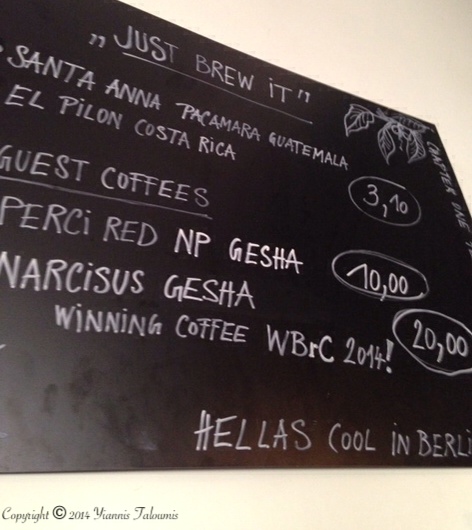
The right (and fair) price for those amazing coffees was 10,00€ for Perci and 20,00€ for Narkissus, per cup.
We sold more that 50 Narkissus cups in brew that day.

.

Some things (never) change.

   phonto (7) phonto (1)

Some things change and some things don’t. 

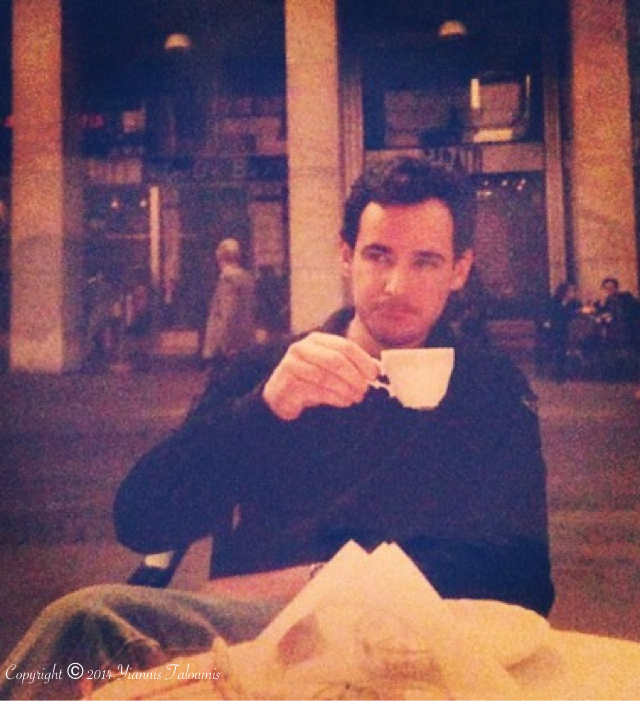
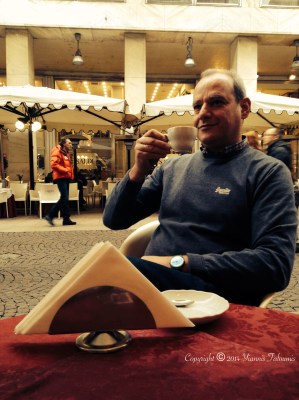
In the picture on the left, here I am in Italy, 22 years ago, in the centre of Milan, via Vittorio Emanuele II, at the central café Bar Ba del Corso. It was my very first pursuit for espresso. I can still remember its bitter taste, I surely was influenced by the fact that I was having my coffee in the centre of Milan, moreover because that period (and many years later) espresso was supposed to be an italian matter.
In the picture on the right, here I am again, 22 years later to the very same table. The only thing that has changed is my age. The café still holds the same name, same decoration, serves the same coffee in the exact cup, color and shape. It is so boring and bitter that the only thing that kept me there was the memory of the moment.  
 
 photo (1)
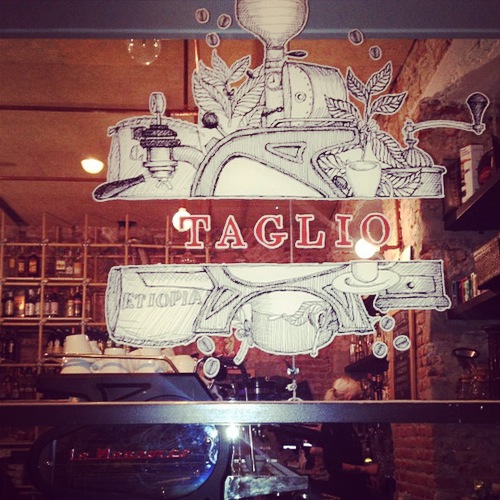
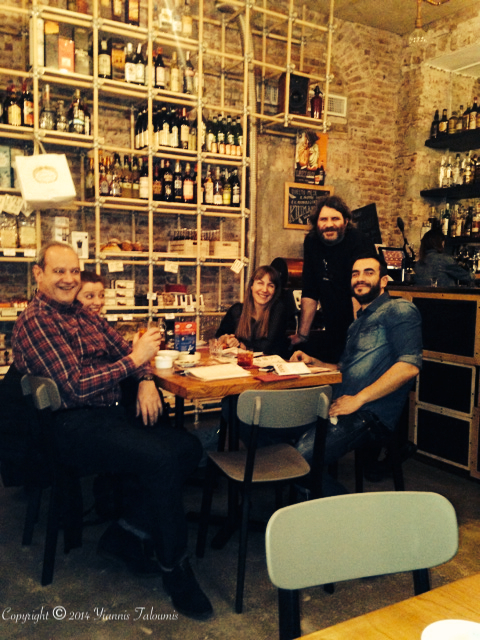
The real reason for being in Milan this time was not the coffee pursuit, but the promotion of my coffee, Taf handcrafted coffee. So, instead for a boring, bitter shot in Milan you can have speciality & single estate coffee in Taglio, Via Vigevano 10, at the famous Navigli area.
phonto (3) phonto (4)
phonto (5)
 
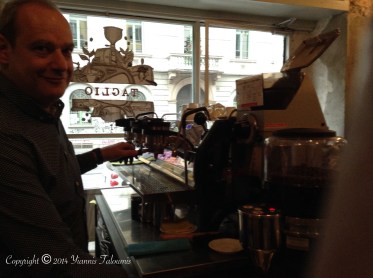
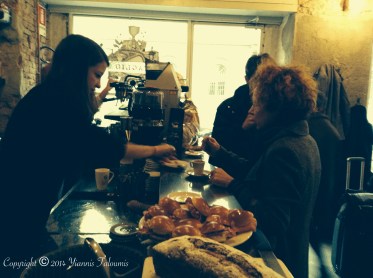
Raffaelle will welcome you and show you around in this temple of flavors. Guila, the barista will prepare espresso in this amazing sophisticated La Marzocco machine, one shot won’t be enough.
Well, some things change. 

phonto (6)